
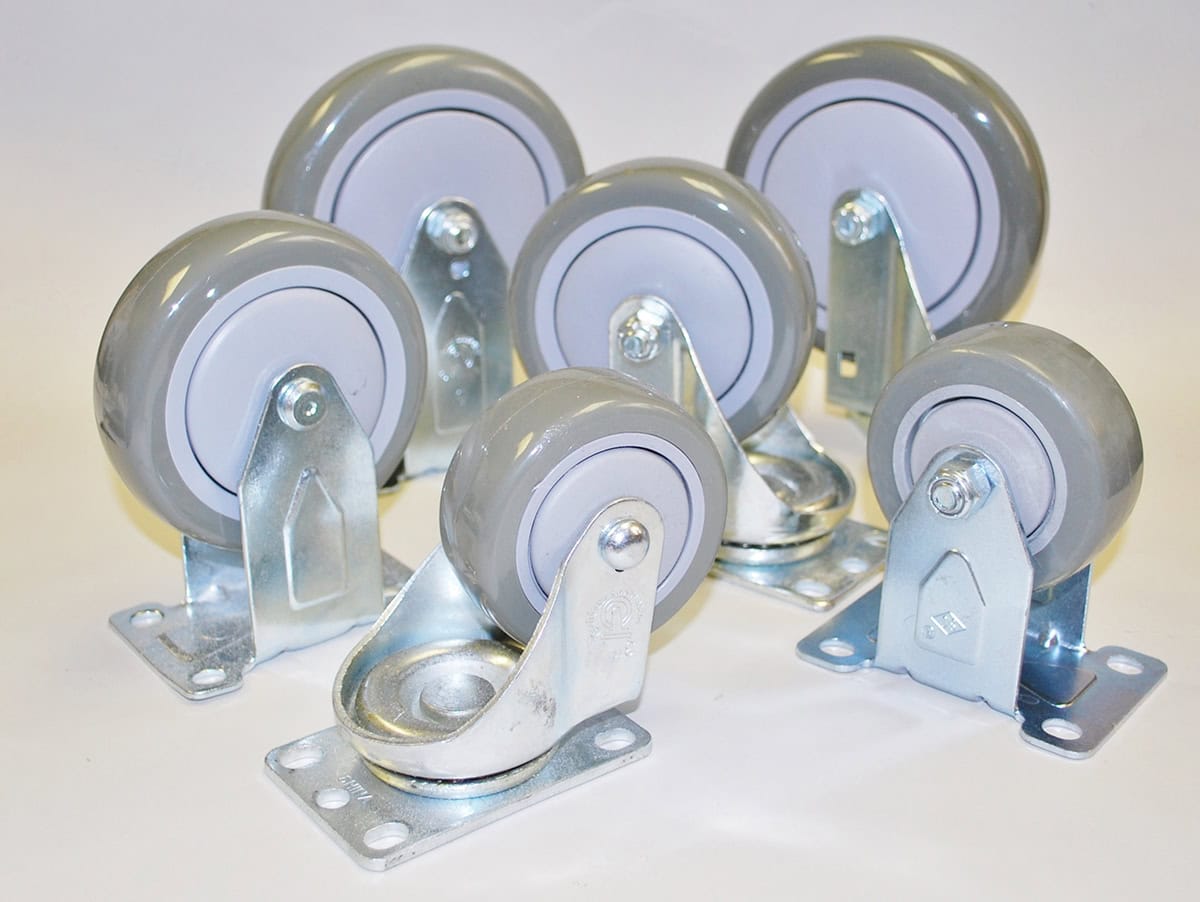


Choosing the Right Wheel for MTE Film Hampers and Bulk Handling
Selecting the right caster setup for your containers has a direct impact on mobility, load protection, operator fatigue, and long-term durability. For applications involving uneven terrain, heavy loads, or sensitive contents—like film and lighting equipment—pneumatic and semi-pneumatic casters are the two most commonly considered options.
This guide breaks down the practical advantages and tradeoffs of each, with specific considerations for MTE film hampers and similar Myton container systems.
Pneumatic Casters (Air-Filled)
What They Are
Pneumatic casters use an air-filled rubber tire, similar to a bicycle or small vehicle tire. The internal air pressure allows the wheel to compress and absorb shock.
Key Advantages
1. Superior Shock Absorption
Pneumatic wheels provide the highest level of cushioning. This is critical when transporting:
- Film lighting equipment
- Grip gear
- Sensitive electronics
- Fragile production materials
For MTE film hampers, this translates to reduced vibration transfer into the container, helping protect contents during transport across rough surfaces.
2. Best Performance on Rough Terrain
Pneumatic casters excel on:
- Gravel
- Dirt
- Grass
- Uneven pavement
- Job sites and outdoor sets
If your MTE hampers are frequently moved between trucks, sidewalks, and location terrain, pneumatic wheels offer the smoothest experience.
3. Reduced Operator Fatigue
Because they absorb impacts rather than transmitting them, pneumatic casters require less force to push over obstacles. This matters in production environments where equipment is constantly repositioned.
Drawbacks
1. Risk of Flats
The biggest downside is puncture risk. Sharp debris (nails, metal fragments, glass) can disable the caster, potentially halting operations.
2. Maintenance Requirements
Air pressure must be maintained. Underinflated tires:
- Increase rolling resistance
- Wear unevenly
- Reduce performance
3. Slightly Less Load Stability
Because the tire compresses under load, there is a small amount of “bounce” or flex. For very heavy or tall loads, this can reduce stability compared to solid alternatives.
Semi-Pneumatic Casters (Flat-Free)
What They Are
Semi-pneumatic casters are solid rubber tires with an air pocket structure molded into the wheel. They mimic the cushioning of pneumatic wheels without requiring inflation.
Key Advantages
1. Flat-Free Reliability
No air = no flats. This is a major operational advantage in:
- Warehouses
- Urban environments
- Job sites with debris
For MTE film hampers, this means consistent uptime with no risk of a disabled cart mid-shoot.
2. Low Maintenance
No inflation, no pressure checks, no downtime for repairs. Ideal for teams that prioritize reliability over maximum cushioning.
3. Good Shock Absorption (Moderate)
While not as soft as pneumatic tires, semi-pneumatic wheels still provide meaningful cushioning compared to hard rubber or poly wheels.
4. Better Load Stability
Because they compress less than air-filled tires, semi-pneumatic casters provide:
- More predictable handling
- Less lateral sway
- Improved control with stacked or top-heavy loads
Drawbacks
1. Reduced Cushioning vs. Pneumatic
They absorb shock—but not to the same degree. On very rough terrain, you’ll feel more vibration compared to air-filled tires.
2. Slightly Rougher Ride on Uneven Surfaces
When moving MTE film hampers over gravel or broken pavement, semi-pneumatic wheels transmit more impact to both the operator and contents.
Application-Specific Comparison for MTE Film Hampers
| Use Case | Recommended Option | Reason |
|---|---|---|
| Outdoor film sets, mixed terrain | Pneumatic | Maximum shock absorption and terrain handling |
| Studio lots, warehouses, paved surfaces | Semi-pneumatic | Reliability and low maintenance |
| Transporting sensitive lighting/electronics | Pneumatic | Better vibration dampening |
| High-debris environments (construction, urban streets) | Semi-pneumatic | No risk of flats |
| Frequent long-distance rolling | Pneumatic | Reduced operator fatigue |
| Heavy, stable loads (stacked hampers) | Semi-pneumatic | Better load control |
Practical Recommendation
For most MTE film hamper users:
- Choose pneumatic casters if your operation involves outdoor locations, uneven terrain, or sensitive equipment where ride quality is critical.
- Choose semi-pneumatic casters if you need reliability, minimal maintenance, and consistent performance in controlled environments.
Final Consideration: Hybrid Use
Some operations benefit from maintaining both caster types across different containers:
- Pneumatic-equipped hampers for location work
- Semi-pneumatic units for studio and warehouse use
This approach maximizes both durability and performance depending on the environment.